Züs’ Cloud Storage Protocol
As we move into the new year and approach the Mainnet launch, there is no better time to look at Züs’ (formerly 0chain) decentralized cloud storage protocol, Blockchain Observable Storage System (BOSS). While some people prefer to read through a whitepaper to understand the full details, many of us, whether we are new investors or not tech savvy, would find a breakdown more helpful (because some people don’t know their head from their BaaS). So, let’s dig into 0Chain’s BOSS whitepaper:
Network Breakdown
First and foremost, Züs took a new approach to their protocol.
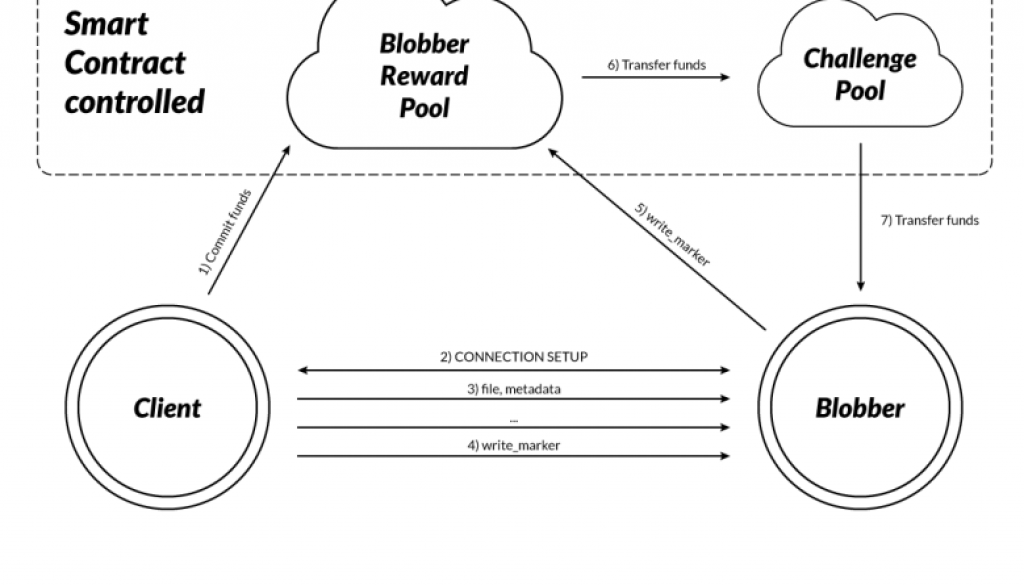
Blobbers, or the computers providing data storage, are not required nor responsible for mining in the 0chain network. By separating the task of mining from sharders, the load on the mining network is lightened which enables fast transactions on the blockchain. Blobbers are in charge of storing the data. Miners are ensuring that blobbers are storing the data that they are being paid to store. For their work to be validated, blobbers must provide three things when issued a challenge protocol by miners: the data being stored, the relevant system metadata, and the client-signed marker to prove that the correct data is being stored. Thus, the miners confirm that the blobbers can be rewarded for their service and that the client is getting the service they are paying for. Based on the blobber’s ability to provide the requested data, their reputation is rewarded or punished accordingly via a smart contract.
Using Züs Decentralized Cloud Storage
So how does a client use a service provider? Clients must hold ZCN, 0chain’s native token, to use the network and its features. Clients communicate with a blobber, which occurs off-chain, to determine the price per gigabyte of data (in ZCN) written and read, respectively. This agreement is called a marker, which is a special signed receipt that acts like a check that a blobber can cash in upon storing the data. After the client and blobber agree to terms, a storage agreement transaction is uploaded to the blockchain containing information regarding the cost of data written and read, special parameters, length of the contract, and signatures of both the client and blobber.

Once the blobber and client agree upon a price, the client locks their ZCN, without spending it, on the network until the completion of the service. During this time, the locked tokens are gaining “interest” which is placed into pools. The blobber reward pool, which contains interest (in the form of ZCN) from the client’s locked tokens, is used as a reward for the blobber to store and read data. Meanwhile, blobbers may also receive a portion of the reward stored in the challenge pool if they verify they are storing the data when “challenged” by miners. After the completion of the agreed services, the client’s ZCN unlocks, giving them the option to either re-lock and use services again or sell them if they no longer require data storage.
Also, check out this Twitter thread highlighting BOSS. If you are interested in reading more about 0chain’s Reward Protocol, check out this breakdown.
*Disclaimer: I am not a member of the 0chain team. As an ambassador, I have included my best understanding of the team’s product and my opinions are not those of the team or company.*