Züs Storage Protocol: Centralized vs Decentralized Storage
Last week, we took a look at the Reward Protocol. As requested by our Telegram community, this week we dive into Züs’ (formerly 0Chain) decentralized storage protocol and the differences between centralized vs decentralized storage. The Blockchain Observable Storage System (BOSS) and other stored information are highlighted in the updated whitepaper.
What is it?
0Chain’s architecture distributes data across multiple servers which makes it nearly impossible for a hacker to obtain all the keys to all the servers in order to gain access. In addition, users are able to have complete ownership, control, and visibility of their data. For enterprises, data protection allows them to reduce dispute resolution, liability, and audit costs.
Current issues centralized vs decentralized storage or on-chain and off-chain data storage:
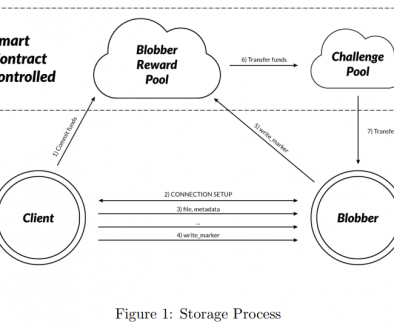
On-chain storage imposes data-heavy transactions that can stall the blockchain and delay other transactions. Other problems of on-chain are privacy, data immutability, and visibility to everyone. In traditional off-chain storage methods, data is placed in local storage volumes and replicated (figure 1). This architecture is vulnerable since a hacker only needs to attack one server to gain complete access. The data breach has affected nearly every industry. Impacting the reputation of large companies like Equifax, Capital One, Yahoo, Facebook, and Uber. To help solve these issues, the 0Chain platform stripes the data across servers forcing the hacker to steal all the keys on all the servers to gain access, which in reality is impossible. These are the benefits and costs when considering centralized vs decentralized storage.

0Chain Protocol & Storage Protocol
The 0Chain protocol takes a different approach compared to traditional blockchains. The tasks of performing consensus, storing blocks, and data storage are divided into 3 separate entities. Those entities are miners, sharders, and blobbers, respectively. Blobbers, or the computers providing data storage, are not required nor responsible for mining on the 0Chain network. By separating the task of mining from blobbers, the load on the mining network is lightened. This enables fast transactions on the blockchain. While blobbers are in charge of storing the data, miners are ensuring that blobbers are storing the data that they are being paid to store.
For their work to be validated, blobbers must provide three things when issued a challenge by miners: 1) the data being stored, 2) the relevant system metadata, and 3) the client-signed marker to prove that the correct data is being stored. Thus, the miners confirm that the blobbers are rewarded for their service and that the client is getting the service for which they are paying. Based on the blobber’s ability to provide the requested data, their stake is rewarded or punished accordingly via a smart contract.

Protocol in detail
The 0Chain protocol writes data to dStorage in parallel chunks of 64kB and is cryptographically signed by the originator as write markers (figure 2). These markers are then rolled up to a Merkle root of the file than to a Merkle root of the allocation. Blobbers then submit these markers to the blockchain for all operations of create/writes, reads, updates, and deletes (known as CRUD operations) in order to submit the final state of the allocation. All these operations are done in parallel so that CRUD operations are not impacted. In fact, this is faster than a single server.
0Chain provides the option to commit all CRUD operations to the 0Chain blockchain in the form of metadata. The metadata and corresponding transaction ID can then be exported and uploaded to another external blockchain, such as Oracle, AWS, or Ethereum Blockchain (figure 3). This allows the data to be processed in an application. Applicable for use cases such as identity, healthcare, supply chain, banking, and more. Simply our system works faster and is more secure when debating centralized vs decentralized storage.

Speed
All blockchain transactions are asynchronous to the actual read/write operations in the 0Chain protocol. Read and write markers are cryptographically verifiable. These markers are presented to storage servers. They submit the latest marker to the blockchain to identify the latest state of their allocation. Since these data transactions are in parallel to blockchain transactions, the entire process is as fast, scalable, and performant as some enhanced cloud services. In addition to these benefits, 0Chain has made the process even easier for enterprise applications. With batch upload and sync operations to automatically commit transactions to the 0Chain Blockchain
About Züs
Züs is a high-performance storage platform that powers limitless applications. It’s a new way to earn passive income from storage.